
The San Diego residential market in 2026 is no longer just about curb appeal; it is about resilience and regulatory compliance. Following the historic rainfall of early January 2026 and the full implementation of the 2025 California Title 24 Energy Code, homeowners are facing a “new normal.” From the immediate coastal strand to the deep inland valleys of Zone 10 and 14, maintaining a home now requires a blend of advanced material science and a deep understanding of state mandates.
This guide serves as your strategic roadmap for 2026, covering everything from “cool roof” requirements to fire-resistant landscaping and the latest smart-irrigation rebates.
1. The Regulatory Revolution: Title 24 and Your 2026 Renovations
Effective January 1, 2026, the updated California Title 24 Energy Code has fundamentally changed the requirements for exterior home improvements. If you are planning a roof replacement or window upgrade this year, compliance is no longer optional—it is a prerequisite for your permits.
The Rise of the “Cool Roof” Mandate
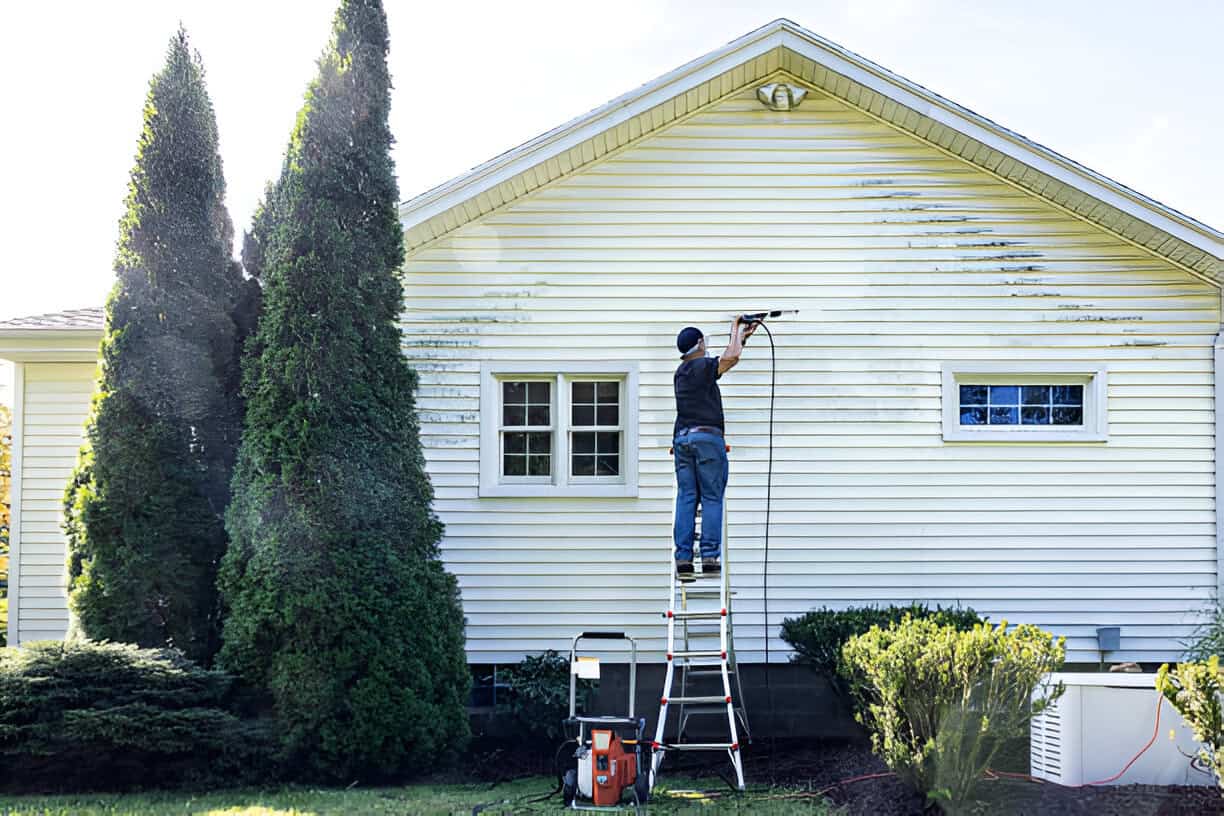
In 2026, any roof “alteration” involving more than 50% of your roof area (or exceeding 2,000 square feet) triggers mandatory Cool Roof standards. These materials are designed to reflect solar radiation and release absorbed heat, lowering roof temperatures by up to $50^{\circ}F$. To maximize the efficiency and lifespan of these new materials, scheduling a professional soft wash roof cleaning is essential to remove algae and dirt that can reduce reflectivity.
-
Low-Slope Roofs ($\le 2:12$ pitch): Must meet an Aged Solar Reflectance of $\ge 0.63$ and a Solar Reflectance Index (SRI) of $\ge 75$.
-
Steep-Slope Roofs ($> 2:12$ pitch): Requirements are now strictly enforced in San Diego’s Climate Zones 10 and 14, requiring an SRI of at least 16–20.
Pro Tip: Beyond compliance, a cool roof can reduce your air conditioning demand by 10% to 30% during those triple-digit Santa Ana wind events.
High-Performance Windows (Fenestration)
Windows are the most vulnerable part of your home’s “thermal envelope.” Under the 2026 standards, replacement windows must meet strict U-Factor (insulation) and SHGC (solar heat gain) limits:
-
Maximum U-Factor: $\le 0.30$ (Standard for most residential projects).
-
Maximum SHGC: $\le 0.23$ in inland zones to block intense solar heat.
Failure to meet these specs can lead to permit denials or mandatory re-work, adding 10% to 20% to your project budget.
2. Stucco Resilience: Managing Moisture in a Changing Climate
San Diego’s 2026 weather has been defined by extreme “Marine Layer” humidity and sudden, intense storm events. For stucco homes, this creates a “porosity trap.” Traditional paints often seal moisture inside the wall, leading to bubbling, delamination, and hidden mold growth.
The “Gore-Tex Effect” in Exterior Coatings
In 2026, the industry standard has shifted from “sealing” to “breathing.” Professional coatings, such as elastomeric membranes, now utilize a “Gore-Tex effect”—they are waterproof against liquid rain but vapor-permeable to let internal moisture escape.
When maintaining these surfaces, avoid high-pressure washing which can force water into the substrate. Instead, utilize safe soft washing for stucco to remove organic growth and stains while protecting your home’s protective membrane.
| Coating Feature | Benefit for San Diego Homeowners |
| Elastomeric Flex |
Bridges hairline cracks caused by seismic shifting. |
| Molecular Breathability |
Prevents vapor pressure from blistering your paint. |
| UV Reflectivity |
Reduces thermal transfer, keeping your home cooler. |
| Mildew Inhibition |
Critical for north-facing walls in coastal zones. |
The 4-Inch Rule: Ensure your metal weep screed (at the base of your stucco) has at least 4 inches of clearance from the soil. Blocking this with mulch or dirt is the number one cause of stucco rot and subterranean termite entry in San Diego.
3. Wildfire Defense: Navigating the 2026 “Zone Zero” Rules
With approximately two-thirds of San Diego located in “Very High Fire Hazard Severity Zones,” the new Zone Zero regulations are the most consequential update to the city’s fire code in decades.
The 5-Foot Ember-Resistant Zone
Full enforcement for existing structures is anticipated for 2026. The “Zone Zero” mandate prohibits flammable materials within 5 feet of your home’s perimeter.
-
Remove: Wood mulch, bark, and flammable bushes.
-
Install: Gravel, pavers, or decorative stones.
-
Retrofit: Replace wood fencing or gates that attach directly to the house with fire-resistant materials.
Fire-Wise Botanical Selections
Choosing the right plants can save your home during an ember attack. Avoid “oily” plants like Eucalyptus, Juniper, and Cypress. Instead, opt for California natives with high moisture retention.
| Recommended Plant | Fire-Resistant Traits |
| Coast Live Oak |
Thick, leathery leaves with high water retention. |
| Toyon |
Hardy native that resists ignition. |
| Lemonade Berry |
Evergreen shrub with a low-growing habit. |
| Agaves & Succulents |
Store significant water in their leaves. |
4. Water Conservation and AB 1572: The End of “Non-Functional” Turf
In 2026, San Diego water rates are projected to increase by approximately 5% due to rising wholesale costs from the regional water authority. Consequently, the ROI on smart irrigation and turf removal has reached an all-time high.
Understanding the New Turf Ban
Assembly Bill 1572 targets “non-functional turf”—grass that is purely decorative and not used for recreation. While individual single-family lawns are currently exempt, many HOAs and commercial areas must comply by 2026–2029. This is driving a region-wide trend toward Climate-Appropriate Landscaping.
Smart Irrigation ROI
Traditional irrigation systems often waste 50% of the water they use. Upgrading to a weather-based or AI-driven controller can drastically cut bills.
-
Turf Removal Rebates: You can earn $2.00 – $4.00 per sq ft for replacing grass with drought-tolerant natives.
-
Device Rebates: Look for incentives of $80 – $100 for smart controllers and $35 for soil moisture sensors.
Important: You must reserve your rebate funds before you begin your project to qualify.
5. Termite Management: The 2026 Swarm Season
San Diego’s unique climate—moist winters followed by sudden heat spikes—creates the perfect environment for two very different termite threats.
-
Subterranean Termites: These aggressive pests live in the soil and build “mud tubes” to reach your home’s wood. They are attracted to moisture near the foundation.
-
Drywood Termites: These pests live entirely inside structural wood and do not need soil contact. They are often identified by “frass” (sand-like fecal pellets) near windowsills.
Preventative Checklist
-
Seal the Envelope: Caulk cracks around windows and doors to block entry points.
-
Eliminate Soil-to-Wood Contact: Maintain a 12-inch gap between the soil and any structural wood (fences, deck posts, siding).
-
Visual Maintenance: Combine expert window washing and screen repair to ensure your home’s exterior entry points are clean and screens are intact, allowing you to easily spot early signs of swarmers.
-
Ventilate: Ensure your attic and crawlspaces are properly ventilated to reduce the humidity that attracts these pests.
6. Decking and Materials: Coastal Salt vs. Inland Sun
If you live within 5 miles of the ocean, salt-air corrosion is your primary enemy. If you are inland, it is UV degradation and thermal expansion.
The Gold Standard: 316-Grade Stainless Steel
In coastal San Diego, standard galvanized hardware will fail within 5–7 years. In 2026, professional deck builders insist on 316-grade stainless steel for all fasteners and railings. This grade contains molybdenum, which resists the chlorides found in salt air.
Material Comparison for 2026
Regardless of your material choice, annual maintenance like(https://sandiegopressurewashing.com/) is required to strip away corrosive salt and grime.
-
Capped Composite: Best for low-maintenance beauty; resists fading and rot.
-
PVC (Synthetic): The “no-fuss” king for oceanfront homes; completely impervious to moisture and salt.
-
Ipe & Tropical Hardwoods: Extremely durable but require annual oiling to prevent graying.
-
Aluminum Decking: Fire-resistant, waterproof, and stays cooler in the sun than composite.
7. Financial Optimization: Leveraging Rebates and Tax Credits
Maintenance in 2026 is expensive, but the strategic homeowner can offset costs by “stacking” federal and local incentives.
Federal Energy Efficiency Credits (Section 25C)
Under the Inflation Reduction Act, you can claim significant credits for qualifying upgrades:
-
Annual Limit: Up to $3,200 in total credits.
-
Windows: 30% of cost, capped at $600.
-
Heat Pumps: Up to $2,000 per year (ideal for moving away from gas furnace maintenance).
San Diego’s HEART Program
In early 2026, the HEART Program enters Phase 3, opening eligibility to households citywide earning less than 120% of the Area Median Income (AMI). This can cover up to 100% of costs for permits, appliance disposal, and the installation of high-efficiency heat pumps or water heaters.
8. The 2026 Seasonal Maintenance Calendar
A resilient home requires a proactive schedule. Use this calendar to align your tasks with San Diego’s meteorological cycles.
Winter (January – March)
-
Gutter Check: Clear debris monthly during the rainy season. Investing in professional gutter cleaning ensures downspouts are clear and moisture is directed safely away from your foundation.
-
Drainage Audit: Ensure your sump pumps and French drains are clear; water should never sit against your foundation.
Spring (April – June)
-
Termite Inspection: Schedule your annual inspection during the primary swarming season.
-
Irrigation Tune-up: Check for broken heads and ensure sprinklers are aligned away from your home’s exterior walls.
Summer (July – September)
-
Defensible Space: Perform your final weed abatement; clear Zone 0 of all flammable mulch before the peak fire season.
-
Driveway Restoration: Use driveway and sidewalk pressure washing to remove spring pollen and prevent oil stains from setting into porous concrete during the peak heat months.
-
UV Protection: Inspect exterior paint for “chalking.” Apply UV-blocking films to west-facing windows to lower your cooling bills.
Fall (October – December)
-
Santa Ana Prep: Prune dead tree limbs within 10 feet of your chimney or roofline.
-
Roof Inspection: Replace damaged tiles or shingles before the winter rains return.
Conclusion: Investing in Resilience
The 2026 San Diego residential landscape is defined by complexity. However, by embracing the “breathable” science of modern coatings , the efficiency of the 2025 Energy Code , and the safety of the new fire regulations , homeowners can do more than just maintain their property—they can future-proof it.
The transition to a more resilient home is supported by an unprecedented array of financial incentives. Whether it is a HEART Program rebate for your HVAC or a Federal Tax Credit for your windows , the path to a high-performance home has never been more accessible.
