
If you live in Chula Vista, you’re familiar with the “June Gloom” that often stretches into July. While the marine layer provides a refreshing break from the Southern California heat, it carries a hidden stowaway: high-velocity moisture that settles on your home’s exterior.
If you’ve noticed a greenish tint or dark streaks appearing on the north-facing or shaded walls of your property, you aren’t alone. This isn’t just “dirt”—it’s a biological colonization. In this guide, we’ll explore the science of why Chula Vista’s climate is a breeding ground for algae and how to stop it before it compromises your home’s stucco and paint.
1. The Chula Vista Microclimate: A Greenhouse for Growth
Chula Vista’s geography creates a unique “dew point” trap. As the marine layer rolls in from San Diego Bay, it hits the warmer inland air, causing moisture to condense.
On walls that receive direct sunlight, this moisture evaporates quickly. However, on shaded walls—typically those facing north or tucked behind thick landscaping—the moisture lingers for hours. This creates a “micro-greenhouse” effect. When you combine consistent dampness with Chula Vista’s mild temperatures, you have the perfect laboratory conditions for Gloeocapsa magma (the bacteria responsible for black streaks) and green algae.
2. Why Shaded Walls are the “Primary Targets”
Photosynthesis is the engine of plant life, but algae and mildew are remarkably efficient at thriving in low-light environments. Shaded walls grow algae faster for three specific reasons:
-
Evaporation Lag: In neighborhoods like Eastlake or Otay Ranch, the morning fog can stay trapped against walls until midday. Without sun to bake the moisture off, the stucco remains porous and damp.
-
Cooler Surface Temperatures: Cooler walls allow for higher “surface tension,” making it easier for spores to latch onto the texture of your home.
-
Lack of UV Sterilization: Sunlight is a natural disinfectant. UV rays kill many fungal spores on contact. Shaded walls lack this natural defense, allowing colonies to grow unchecked.
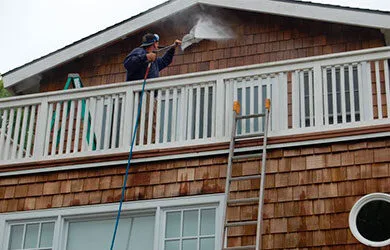
To protect these vulnerable areas, many homeowners utilize professional pressure washing in Chula Vista CA to physically remove the spores and break the growth cycle before the roots penetrate the substrate.
3. The Stucco Struggle: How Algae Eats Your Home
Most homes in Chula Vista are finished with stucco or high-performance acrylic coatings. While durable, stucco is essentially a hard sponge.
When algae and mildew settle into the “peaks and valleys” of a stucco finish, they begin to retain water against the building’s paper barrier. Over time, this biological growth can lead to:
-
Stained Finish: The metabolic byproducts of algae leave permanent pigments.
-
Cracking: Persistent moisture causes the stucco to expand and contract unevenly.
-
Paint Failure: Algae can actually “eat” the organic binders in lower-quality paints, causing peeling and chalking.
4. Neutralizing the Growth: Pressure Washing vs. Soft Washing
When dealing with the delicate balance of Chula Vista’s marine layer mildew, a “one size fits all” approach to cleaning can do more harm than good.
-
The Danger of High Pressure: Blasting shaded stucco with high-PSI water can force moisture deeper into the wall, potentially leading to interior mold issues.
-
The Soft Wash Solution: This method uses eco-friendly, biodegradable surfactants to kill the algae at the root level. It’s like a “pest control” treatment for your walls.
For residents seeing significant buildup, professional Chula Vista CA pressure washing services often utilize these specialized low-pressure techniques to ensure the algae is chemically neutralized, not just moved around.
5. Preventative Steps for Chula Vista Homeowners
You can’t stop the marine layer, but you can change how your home interacts with it.
-
Trim Back Landscaping: Ensure there is at least a 12-inch gap between your shrubs and your walls to allow for airflow.
-
Improve Drainage: Ensure gutters aren’t overflowing onto your shaded walls, adding even more moisture to the equation.
-
Regular Maintenance: Don’t wait for the wall to turn green. An annual rinse can prevent spores from ever establishing a colony.
Summary: Reclaim Your Curb Appeal
The green and black streaks caused by Chula Vista’s marine layer are more than an eyesore—they are a threat to your home’s exterior longevity. By understanding the relationship between shade, moisture, and biological growth, you can take proactive steps to keep your property pristine.
Is the marine layer leaving its mark on your home? Don’t let algae take root. If you’ve noticed darkening on your shaded walls, a professional cleaning is the most effective way to restore your home’s health and beauty.
